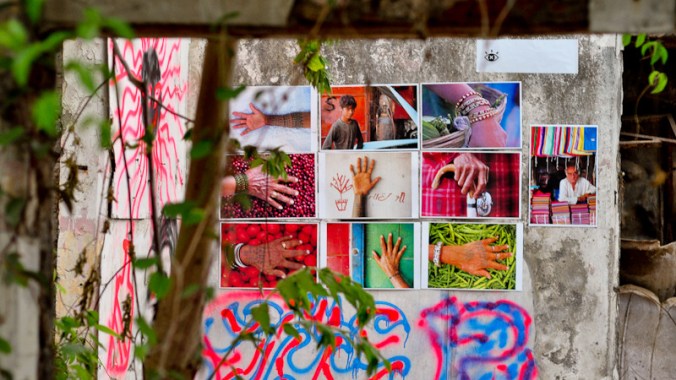
Great images and commentary from TED Fellow Puneet Rakheja on this Blindboys street exhibit.
Great images and commentary from TED Fellow Puneet Rakheja on this Blindboys street exhibit.
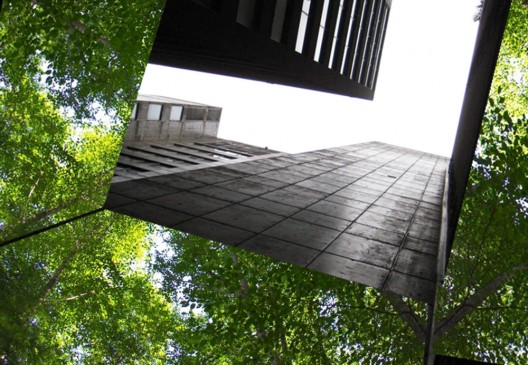
“The Infinity Forest is a green oasis amongst the hard, vertical walls of Penfold’s and Hosking Place.” Sydney. As there is no mention of any sound component to this intervention, I imagine the sound inside the box is much the same as outside, and I wonder if this adds or detracts from the Infinity Forest experience.
Boogie Woogie Wonderland
I learned of Takuji Kogo recently, as I learned of the fullness of Instant Coffee’s endeavours, all through Art Metropole. It was the video work of both that Art Metropole had collated and distributed, but it is the language work of both that charms me most. A recurring element in Kogo’s work is found texts – everything from want ads to fortune cookie slips. Presented as text on a screen, but in fragments, or sung as simple melodies through a vocoder, the actualities are encountered fresh, their backstories and imagery evoked for contemplation. When matched with a slowly zoomed and panned image, the effect is to eavesdrop on the collective unconscious. The image work is effective on its own, as well, as seen above in Boogie Woogie Wonderland (with its added zest of looping frames). But for the full effect, visit Kojo’s project site *Candy Factory. Cute Or Creepy is a terrific specimen to start with.

Supernumerary, acrylic on canvas, 2010
No, it’s someone else’s now. But you can still get yours at Corey Helford until May 5. Or tell Mr. Petker you’d like more notice next time.

How I am enjoying the revelation that is recognizing the influence Instant Coffee has had on Even More Legendary. But I’m getting ahead of myself.
The first revelation – the impetus to post – was that Instant Coffee is more than its email list. Not to get too windy, but…I was reading about Micah Lexier’s multiples book I’m Thinking Of A Number on the Art Metropole site, and just below its listing was one for an Instant Coffee poster. As a longtime fancier of the seemingly arbitrary IC email subject lines (the only one still in my inbox serves just fine as an example: “peak everything!”), this made instant sense (no matter that the actual posters may not be, in fact, what I’d imagined in that instant).
Subsequent clicks revealed the secret life of IC as an artist collective. This also made instant sense, although I would not want to have to explain that to anyone. The Coffees make things and happenings, like Light Bar, pictured above, and Make Out Parties (and their documentation, Year of Love).
The Coffee spirit enjoyed by email subscribers across this fair land is evident in their manifesto, and forgive me for reproducing that entirely here, I know how you like your internet bite-sized, but then if you come here you would probably reject an apology for including the full manifesto. It’s only short anyhow.
With wavering clarity we understand that what we do is confined to the limitations of representation and we’re okay with that. As a product and service Instant Coffee is an effective substitute: It mimics the real thing without the pretense of being better. It isn’t that much easier to make, which is reason enough to justify it. Taste is a factor, taste being an important way to designate quality and define preference. But quality is too particular and preferences change. They are superfluous really, misnomers that distract from the basic reasons for ingesting either the real thing or its substitute. Value is in their effect. In its taste, Instant Coffee barely resembles the real thing, but its effect is the same. Regardless of taste, it still works. Quality is beside the point. In this disregard Instant Coffee becomes a medium to be used. This is Instant Coffee.
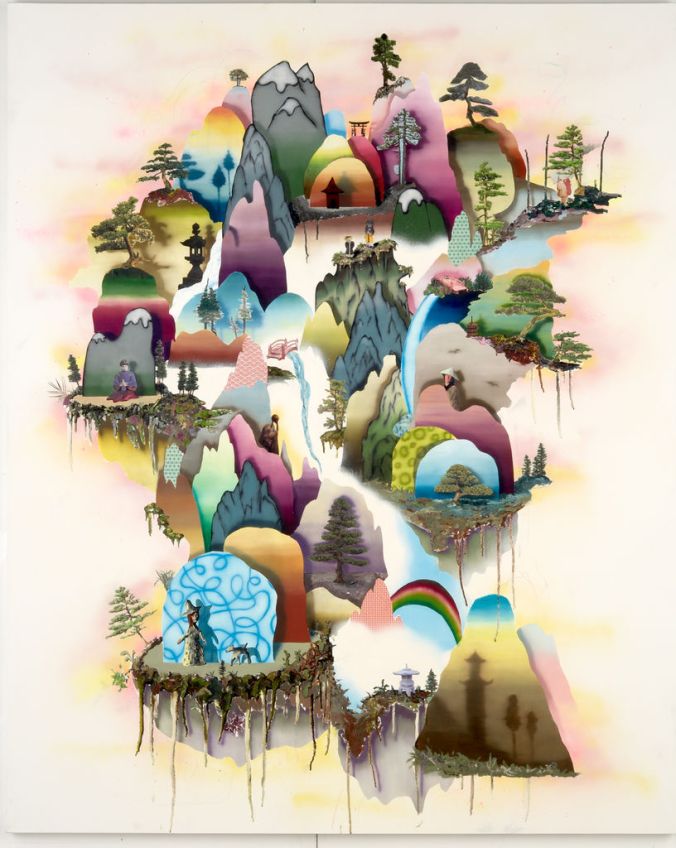
Chinoiserie, oil and acrylic on canvas, 2007
I’ve read some interesting texts on representation lately. One of them was the thoughts of Mark Tansey, from at least eighteen years ago, in Arthur Danto’s Mark Tansey: Visions and Revisions. The other was by Alicia Paz, on her website, linked below. Paz says that her current practice is about exploring the tension between illusion and process. You probably get a sense of the illusion side of that battle from the image above. It’s not like any place you’ve been before, admit it. For a better sense of the process side, click it and you should have a slightly better view of the assembly that’s deliberately on display.
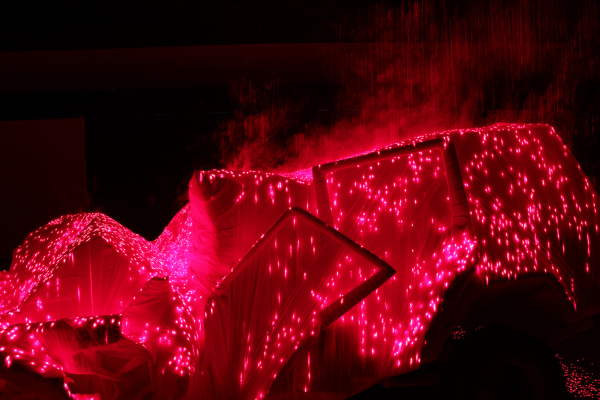
I post this even though it’s over (not in my email = viewed maybe monthly. Email sub option please, LIMO, cuz monthly’s not enough of you) partly because I want to be able to look at the pretty picture in here, and partly assuming it will go on to other locations (assuming because there is no googleable indication of this). Set your alerts.
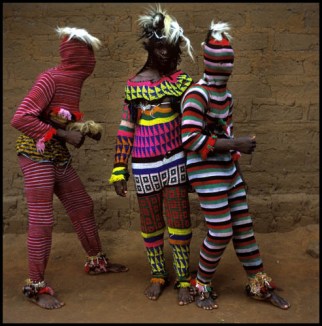
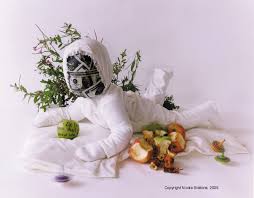
Left, Ngar Ball Traditional Masquerade Dance, Cross River, Nigeria, 2004, Phyllis Galembo. Right, Economies of Living no. 2, 2005, Nicola Siddons
Don’t read too much into this post, folks. I actually just wanted to adjacentize these. Selfish. Do visit both sites, however, as each contains thoughtful and rewarding views.

Maybe you’ve seen her fold paintings at the Whitney Biennial*. Maybe you attended her performances at Deitch Projects with Cameron Miserow on the Auerglass, the pump organ they designed. Maybe you were a delegate of Rhizome’s Seven on Seven the other day, and saw her create interactive sculpture on the fly with Ayah Bdeir? Perhaps you have been exposed to her work on the Geometry Playground project for the Exploratorium?
If not fret not. Tauba is going to be busy blowing minds for a long time to come, and she gives warning of opportunities to witness. Prepare for her madhouse website, linked below. Bookmark.
*not too late
 Even More Legendary
You must be logged in to post a comment.